

Hostage negotiators and User Researchers have a lot more in common than you might think. Really.
Never Split the Difference by Chris Voss introduced me to tactical empathy. With each page, I kept recognizing the same skills I use in interviews: mirroring or probing to invite deeper reflection, and in synthesis, naming and summarizing the unmet need I found. The goal is the same, to understand what’s really driving someone before you act.
The skills that define User Research don’t belong to us
They’re older and broader than the role.
When I first started doing User Research, I didn’t know it was a profession. I had just joined a 6-person start up, to work in customer and product support. One morning, the CEO asked me to conduct a usability study and like you do at any start up, I said, “Sure.” And then searched the internet for “usability study” to figure it out.
Over time, as I grew my User Research skills, it became a part of my job, way before it became my career. I was a customer support specialist that used research skills to understand the root problem behind the complaint. That’s essentially a root cause analysis. I was a product manager that conducted research to figure out what to build and prioritize. An agile project manager that observed, interviewed and mapped out a process to make efficiency improvements. I embraced systems thinking long before I had a name for it: how people, decisions, and handoffs connect before you try to fix anything.
The further I explored, the more these skills showed up in unexpected places. As I began training as a death doula, I kept finding the same instincts showing up in an entirely different context: being present, active listening, withholding judgment, leading with empathy and meeting clients and their circle of support where they are. The stakes couldn’t feel more different from shaping products and decisions at a company, and yet the way of being with another person is remarkably the same.
That realization led me to create the Legacy Party, a mash-up of death doula work and product discovery, where the product is each person’s legacy. Using activities you might recognize from a design sprint, I help people think creatively and intentionally about what they want to gift their loved ones, their community, and themselves.
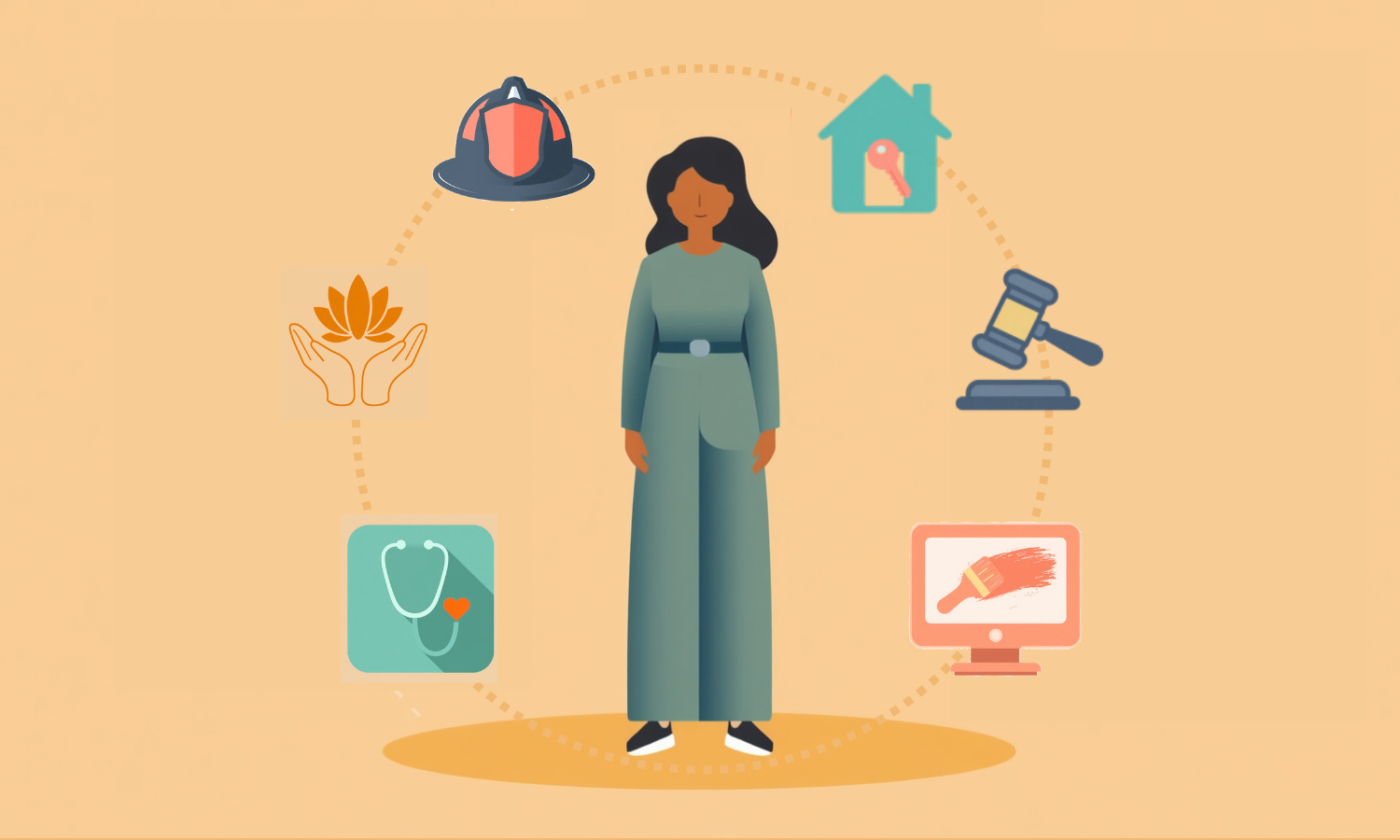
From firefighters to lawyers, research skills travel further than you think
I’ve seen colleagues transition in and out of User Research from adjacent and unexpected roles.
Many, like Claire, Liz, and my co-author Elissa, have made the transition from User Research to Product Management or Design, and sometimes back to User Research. The transition was a natural next step because at the heart of Product Management and Design is the ability to prioritize and make decisions based on both business goals and user needs. The most effective researchers do this every time they scope their study, wade through the data to determine what matters most, and recommend action. Others, like Diane and Victoria, brought their deep empathy, curiosity, and instinct for asking the right questions at the right time into Executive Coaching.
And in more surprising career transitions, Marisol left the field to become an Emergency Medical Technician on her way to becoming a Firefighter. Arriving at a scene and rapidly assessing what’s actually happening before acting, and knowing when to dig for the underlying need, is what a user researcher does in contextual inquiry. She’s going to where a person is to understand their environment and situation before drawing any conclusions. Different stakes, same instinct.
Jing left User Research to run memory care facilities where she draws on her research skills daily. She deeply understands her residents to improve their care, and when expanding to her second location, conducted market research to validate the site. Then, just as a researcher runs usability studies to inform product iterations, she observed how the layout and features of her first home shaped the living and care experience, and used those to improve the blueprint for her second, which recently opened.
Another peer, Paul, left User Research Leadership to co-found a real estate group, where he’s building operations, marketing, and community infrastructure alongside an experienced agent. He’s not running formal studies, but the instincts are still there: understanding what clients need, noticing what matters to them, and designing experiences that are curated, thoughtful, and intentional.
And Chelsey went back to school to become a Lawyer, where deep research and suspending assumptions are as fundamental to law as they are in User Research. Learn more about her experience here and here.
I’ve witnessed, coached and supported nearly 50 people leave another field to enter User Research through Meta’s Research Associate Program, which I co-led with Sal Becerra. For this program, we sought out people who led with innate curiosity, who could draw a line of connection between what they already did and what a User Researcher does, and who demonstrated entrepreneurial spirit with the ability to withhold judgment in favor of curiosity, while creating clarity from ambiguity. The other technical research and business skills? Those we could teach. The research instincts paired with entrepreneurial spirit? Those had to already be there. That connection was always there, the program just formalized it.
User Research is evolving, not disappearing
We believe the role itself is evolving, and not in the direction many people fear. This is a story of expansion, not replacement.
We speculate that User Research will increasingly blend with adjacent disciplines. The deep specialist gives way to what we’re calling Research+: researchers who bring Product Management, business strategy, Data Science, Design, or Marketing fluency alongside their core craft.
The work itself shifts toward strategy. When Agents can execute and AI makes knowledge a commodity, the researcher’s unique value isn’t in running the study, it’s in knowing which question to ask, translating insights into product bets, and influencing what gets built and why. While execution gets automated, judgment won’t.
Governance becomes a critical and underappreciated function. As AI-generated experiences project an air of authority, someone needs to assess validity, catch bias, and flag when the output doesn’t reflect reality. User Researchers are uniquely trained to do exactly that.
The scale of the work changes too. We anticipate researchers running 20 to 30 studies simultaneously rather than the 2 to 3 that were possible before, triangulating across their own data or supporting multiple teams at once. And the definition of a team expands to include AIs, working alongside us, sometimes ahead of us, always on.
The role may evolve. The instinct underneath it won’t.
***
The same user research skills that travel into firefighting, law, real estate, and death doula work are the ones missing from too many of the rooms where AI products are being built. The experiences being designed right now risk minimizing human agency, eroding transparency, and replacing human connection with automation. That’s not inevitable; it’s a design choice, and it only gets made well when people who are trained to center the human are present when it happens. The title of User Research was never the point. The instinct to apply it was. And right now, that instinct is needed more than ever.
Beth Lingard is co-authoring “Designing for Humans in the Age of AI” with Elissa Darnell. This newsletter is published every two weeks.
Love this! Might I also add, teaching! I come from the education space, and I think a lot of things that teachers are good at also make great researchers. To be a good teacher, you have to understand:
- what your students know
- what they don't know
- what they think they know
- what their fears are
- what their preferences are
- what can make them feel safe to explore and even fail
I found these skills always come up in UX research, but they also make a teacher who is very empathetic and can change their classroom or curriculum to help their students be as successful as possible.